I recently read a terrific article about apathetic college students written by my friend, Tom Harrington, a Senior Brownstone Scholar and Fellow.
Tom shares how utter apathy and cynicism has infected college students he once taught and how he ultimately successfully engaged them by confronting their obvious indifference. His article inspired me to share a cautionary tale which illustrates the perils of some very pernicious trends in our society and culture.
Recently, a college-aged friend who attended a very prestigious US university shared an experience with me that I found not only heartbreaking, but deeply disturbing.
This young friend spent the fall of her senior year in college in a study abroad program in Europe. While abroad, she voted to reelect President Trump.
She had some very close girlfriends in college but never let on to these friends that she is conservative.
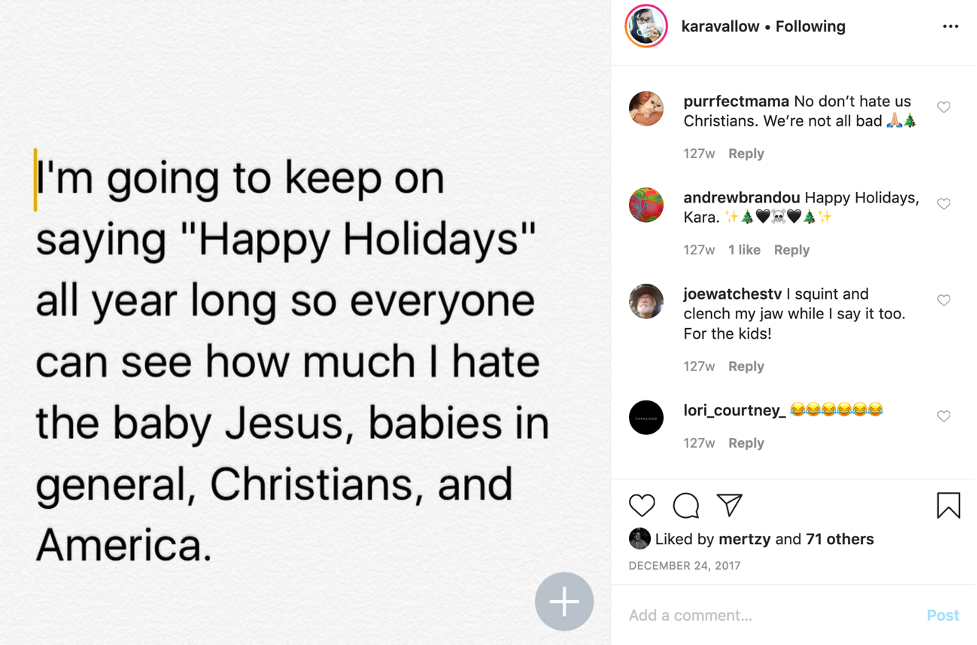
When the friends were all texting back and forth after the election and she did not chime in echoing their disgust and outrage that the vile Trump had been elected, they took notice and then shrieked at her (in texts) – “you voted for Trump, didn’t you?”
She ultimately admitted that she had indeed voted for the dreaded orange man and then attempted to engage in dialogue to explain her thought process and reasoning with her cherished friends. But her three friends did not discuss, they did not listen, they did not seek to understand. Rather, they excommunicated her from the group and did not engage with her in any meaningful way again. Some of them simply never texted or spoke to her again even after she returned to campus.
She was cancelled on the basis of a vote. Permanently othered by the very women she thought were her cherished friends. Despite attending, or maybe because of, attending a very elite college, they simply could not hold two opposing ideas in their brains-namely, that this young woman could be a valued friend and simultaneously hold a differing perspective on politics.
These were her supposed “best friends”…from college…cutting off friendship…for supporting the wrong candidate.
This young woman had not spread vicious rumors about her friends or lied to them, she had not dated their boyfriends or done anything remotely rude or unkind to them, but in their minds, she had committed the most grievous sin of all – she had betrayed them by voting for a conservative. She had effectively rejected the flock by forming her own opinion and exercising her sacred right to vote and now deserved to be othered.
Young people today have a lived experience different from anything those of us who came of age before the era of cancel culture and the fish bowl of existence have ever known. (As an aside, I remember the story of an adolescent girl in our community about 20 years ago who became the subject of a social media page titled “I hate Jane Doe” to which others could join and comment. When I was young, sure, there were groups of mean girls who excluded others (in retrospect, I regret that I was not a very nice girl to many girls in high school), but there was nothing so public, so able to shame and humiliate as Facebook or other social media platforms where this could be posted.)
This recent cultural milieu of cancelling and public shaming, so foreign to us older folks, has more effectively led to self-censorship than anything the Soviets or East Germans ever cooked up to ensure children reported their own parents or friends betrayed their circles if one of them expressed an unacceptable antigovernment opinion.
This cultural development is so very, very dangerous as it threatens the core method by which we develop our adult selves as mature human beings. Historically, young people would try out their ideas on their friends and families, they would engage in informal conversation about issues, morals, ethics, etc. round the dinner table, on the soccer field, or just hanging out with their friends as they formulated their individual world views.
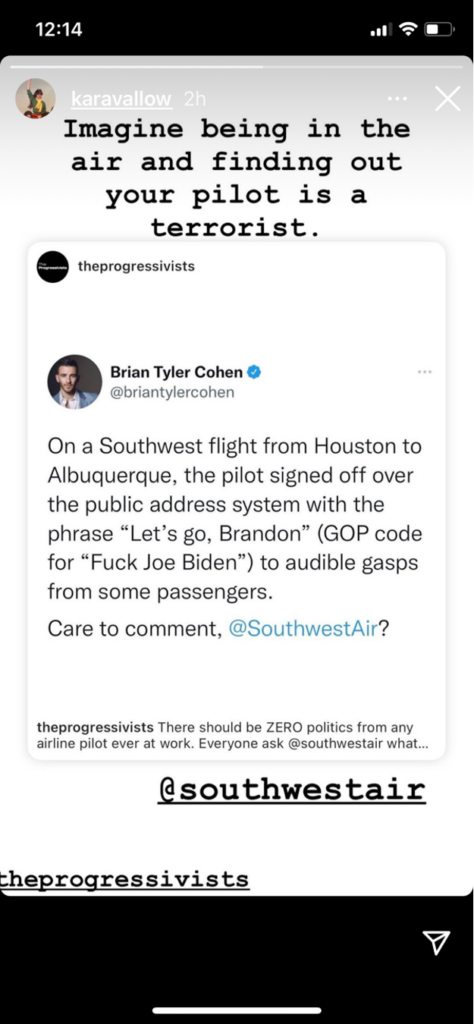
But today, there is little space to do this on the social front or tolerance of it in their friend groups. If one friend does not ascribe to the prevailing group think by liking the wrong posts online or by espousing the same views as their buddies, the result is instant pariah-hood.
We have been so effectively siloed into our echo chambers by the algorithms which drive search engines, news feeds, and social media, that our political and social orientations have become our identities.
Fewer and fewer Americans live next to someone who disagrees with them and research even shows that 4% of them will sell their homes and move if someone from the opposite side of the political aisle moves in next door.
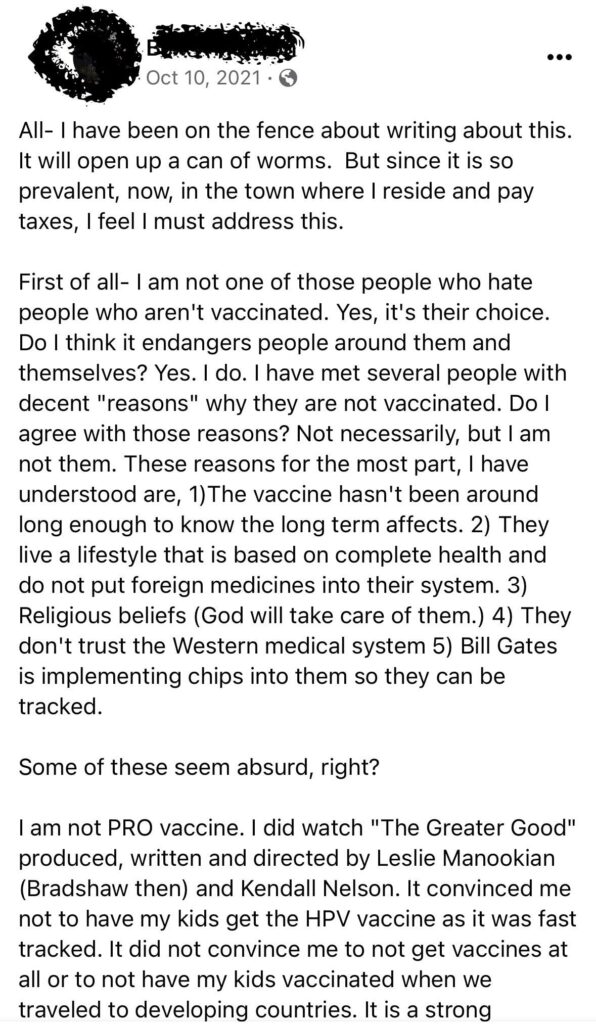
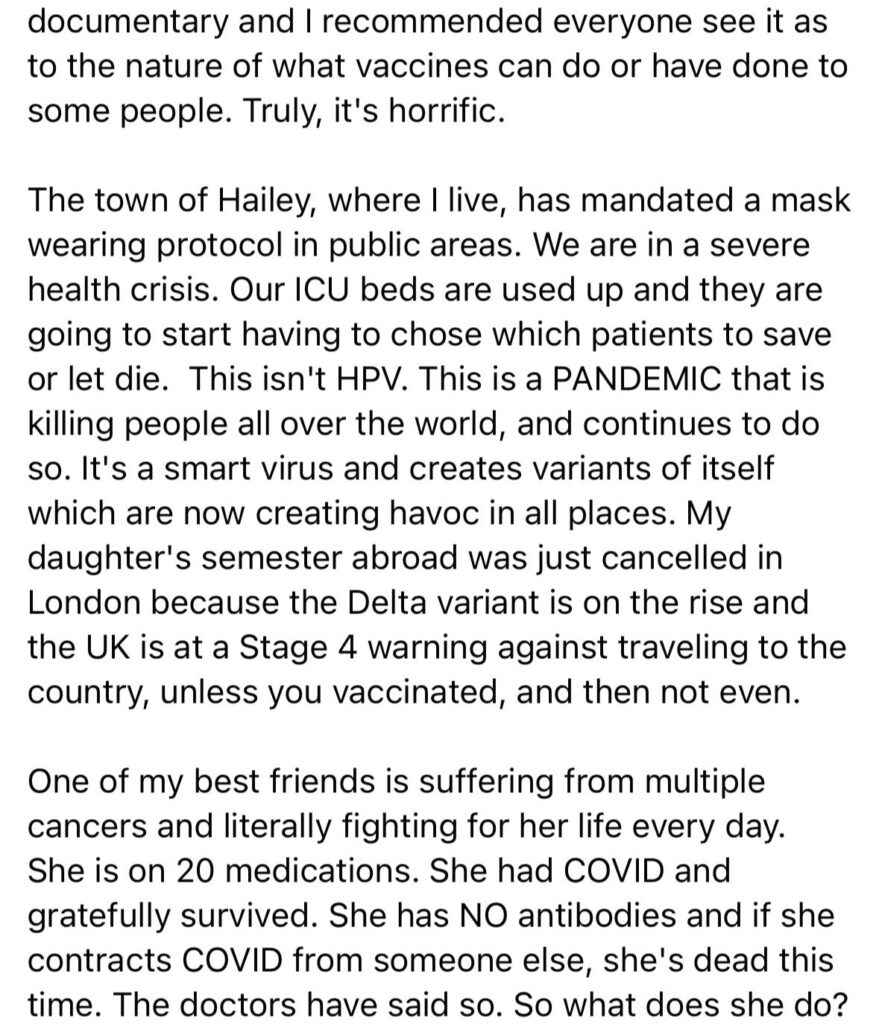
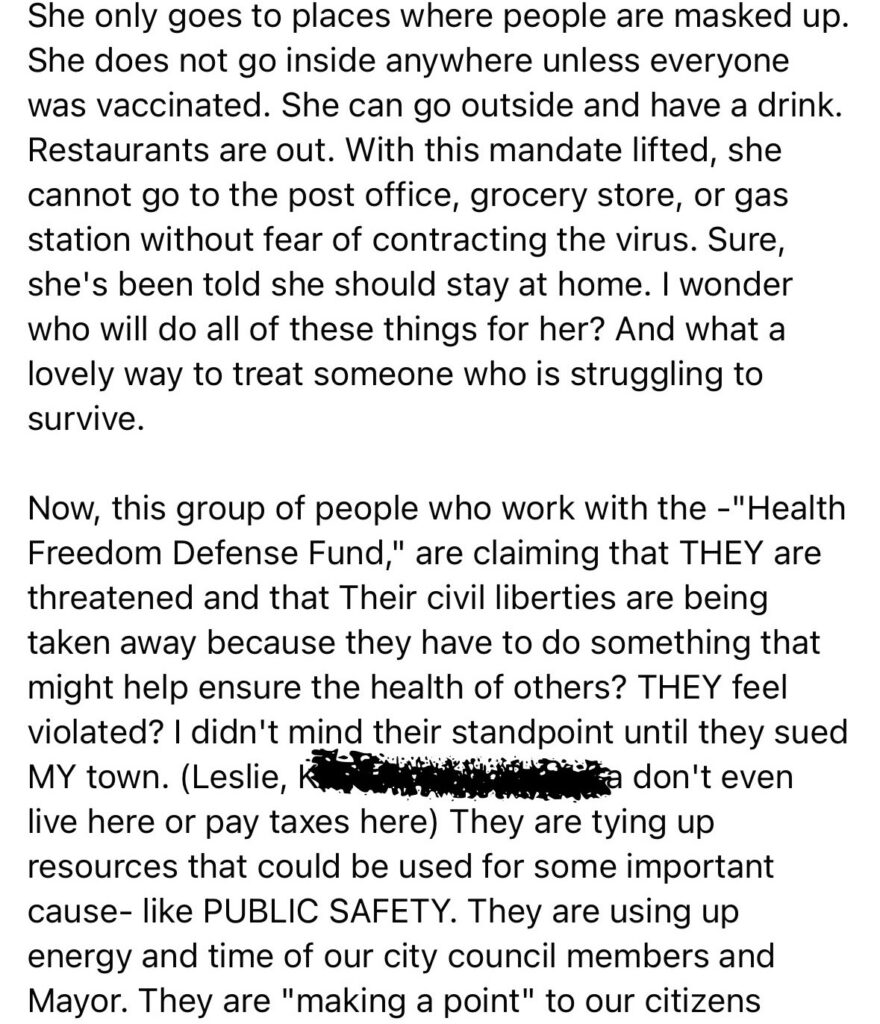
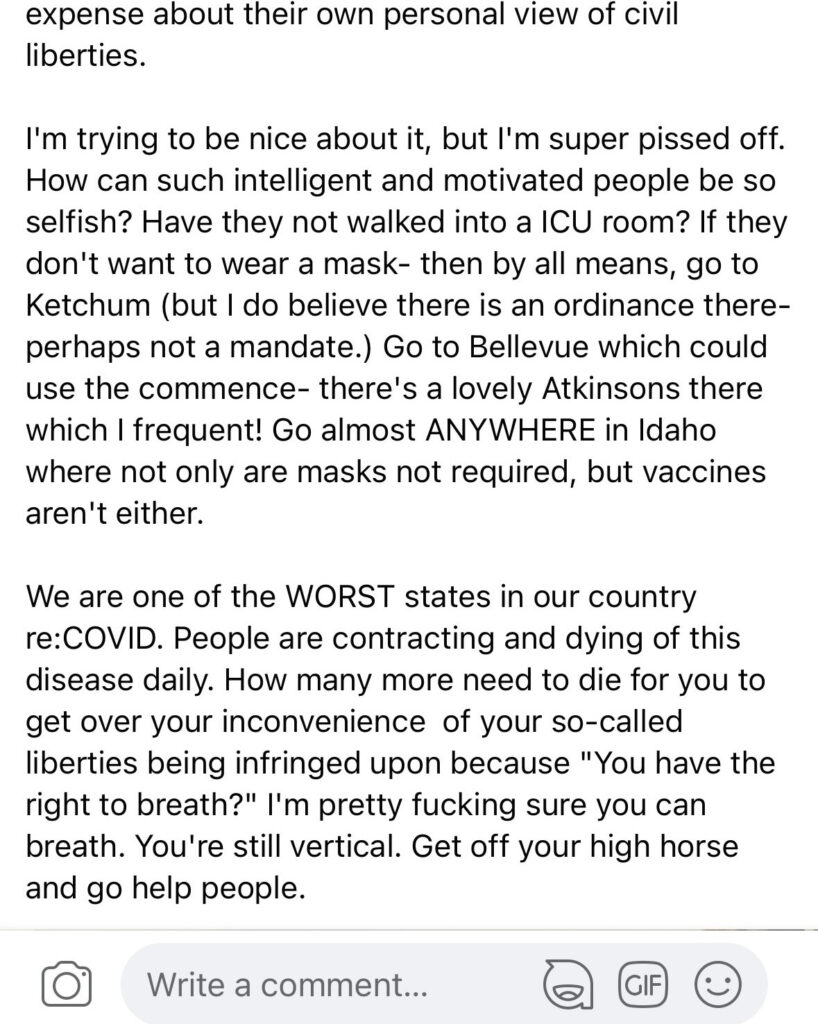
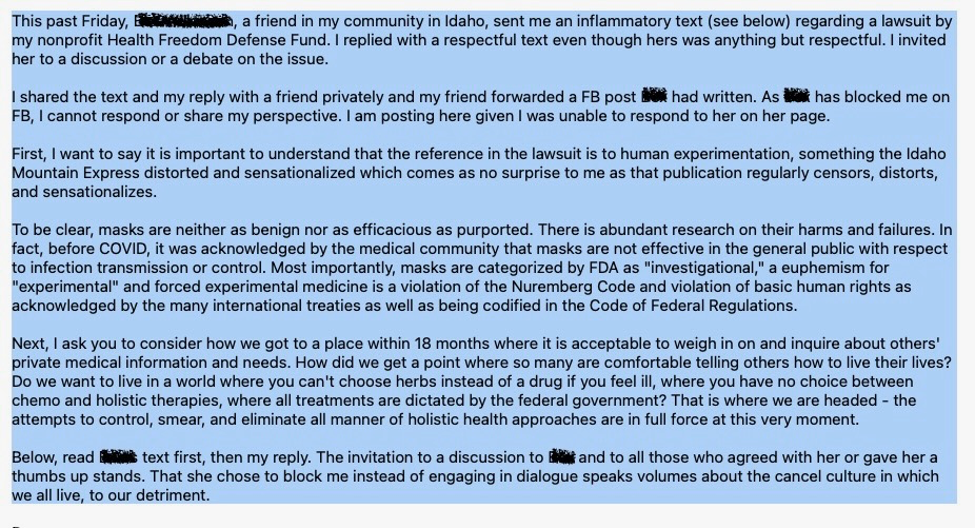
In my own life, I’ve seen how even my most beloved childhood friendships have withered as I began to criticize vaccines, false nutrition advice, and media lies and instead espoused notions surrounding individual responsibility, holistic health, the threat of the uni-party system and more.
We all feel it. We can all see this happening. But what are we to do?
We adults must acknowledge that we have a problem. We must understand how devastating the development of insular thinking and insular communities is and seek to correct this urge towards isolationism. We must do this to model healthy behavior for our kids.
We must cultivate consciousness in ourselves so we are capable of objectively observing how we fall prey to these patterns of behaviors. As is often said in the healing arts and personal development communities, self-awareness and consciousness of a problem are the first and biggest step in solving that problem.
We must stop saying things like so and so is “one of us” if they have similar political views or eschewed the covid shot like we did.
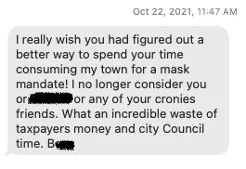
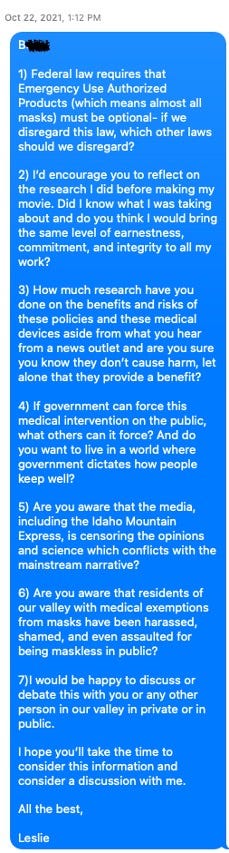
We must also be brave. We must resist the urge to self-censor. In fact, we older folks MUST continue to stand up without fear, we must oppose these trends by our visible stance. We must be willing to be uninvited from our social circles, to lose certain social benefits, to be called names and pilloried in our local media, to even have some family members cut ties.
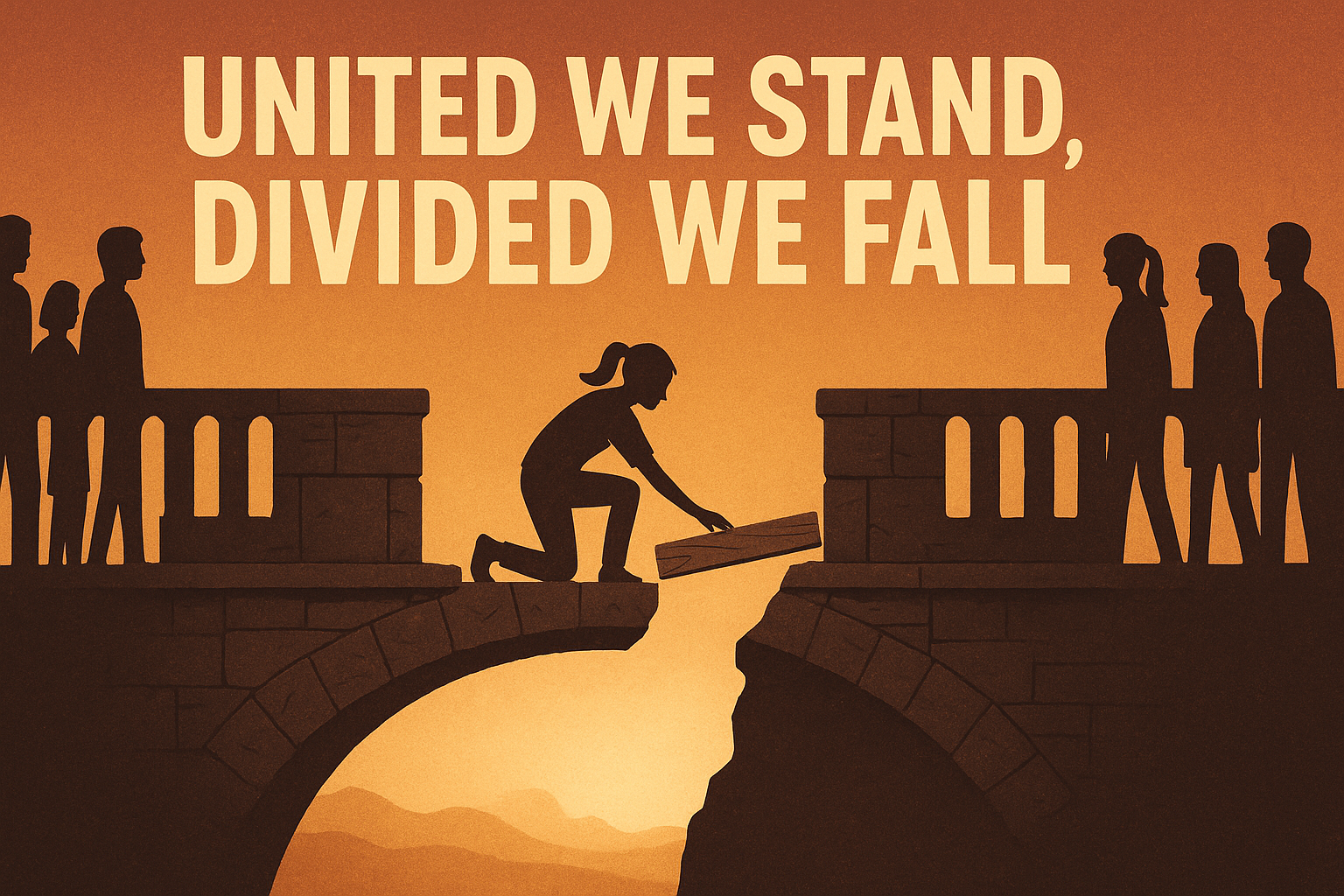
We must model the behavior we want to see in our young and to do it without ostracizing friends who think differently. We must continue to love our neighbors as we do ourselves. Then, maybe just maybe, we can abort this dangerous trend that seeks to divide us because divided we cannot—and will not—stand.